
 Default Currency



Best Practices for Selecting Pharmaceutical Hoses and Tubing
Posted by Flex Technologies on 27th Apr 2026
In the highly regulated world of pharmaceutical manufacturing, the integrity of your fluid transfer system is non-negotiable. Whether you are moving sensitive biologics, aggressive solvents, or high-purity water, the components you choose define the safety and efficacy of your final product. When you source from Flex Technologies, you are tapping into a legacy of precision engineering. However, selecting the right pharmaceutical hoses and pharmaceutical tubing requires more than just picking a part number; it requires a deep understanding of compliance, material science, and operational environment.
Here are the six best practices you should follow to ensure you select the optimal fluid handling solutions for your facility. Browse online today.
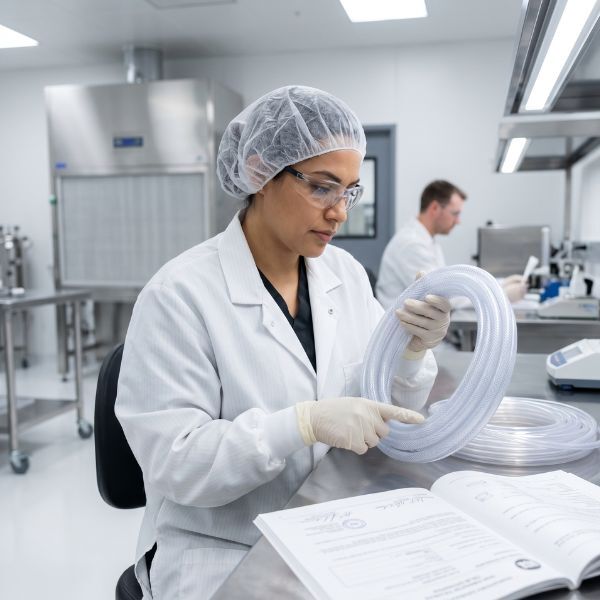
Prioritize Regulatory Compliance (FDA and NSF)
Your first step must always be verifying certifications. In the pharma industry, "food grade" isn't specific enough. You need to ensure that you are using FDA hose and FDA tubing that meet CFR 21.177.2600 standards for repeated use with aqueous and fatty foods. Furthermore, if your application involves potable water or specific extraction limits, look for NSF hose and NSF tubing. These certifications provide you with the documented assurance that the materials will not leach harmful substances into your process stream.

Evaluate Chemical Compatibility
Pharmaceutical processes often involve a cocktail of active ingredients, cleaning agents, and solvents. Before selecting your pharma tubing, you must perform a thorough chemical compatibility analysis. Silicone is a popular choice for its flexibility and purity, but it may not hold up against certain aggressive chemicals or high-pressure steam. Flex Technologies offers a variety of polymer blends; ensure the material you choose won't degrade, swell, or discolor when exposed to your specific media.

Consider Temperature and Pressure Extremes
You must look beyond the standard operating conditions. Consider the extremes of your Sterilization-in-Place (SIP) and Clean-in-Place (CIP) cycles. A pharma hose might handle your room-temperature product perfectly but fail or lose its structural integrity when subjected to 130°C steam. Always check the burst pressure ratings at maximum operating temperatures. Reinforced hoses with stainless steel braiding or polyester monofilament are often necessary when your process demands high-pressure resistance without sacrificing flexibility.

Assess Surface Smoothness and Extractables
In the world of pharmaceutical tubing, the internal bore is everything. A high-quality tube from Flex Technologies features a mirror-smooth internal surface (low Ra value) to prevent "bio-burden" buildup. If the surface is microscopically rough, bacteria can find a foothold, leading to contamination. Additionally, ask for extractable and leachable (E&L) data. You need to know that your tubing won't "gas out" or shed particles that could interact with sensitive protein-based drugs.

Flexibility and Kink Resistance
Space is often at a premium in cleanrooms and laboratory skids. When you are routing pharmaceutical hoses through tight enclosures, flexibility is paramount. A hose that kinks easily creates flow restrictions and stress points that lead to premature failure. Opt for vacuum-rated hoses if your process involves suction, and look for materials that offer a tight bend radius. This ensures that you can maintain a compact footprint without risking a catastrophic leak due to mechanical stress.

Transparency and Visual Monitoring
For many laboratory and analytical applications, being able to see the fluid flow is a major advantage. If your process requires visual confirmation of flow or the absence of air bubbles, clear pharma tubing is essential. High-clarity silicone or TPE (Thermoplastic Elastomer) options allow you to monitor the process in real-time. This visibility acts as an extra layer of quality control, helping you spot discoloration or particulates immediately before they reach the filling line.
BROWSE ONLINE TODAY
Selecting the right fluid transfer components is a foundational element of pharmaceutical quality insurance. By focusing on certified FDA hose and NSF tubing, and by carefully weighing factors like chemical compatibility and thermal resistance, you protect both your equipment and your patients. Flex Technologies provides the high-performance materials needed to meet these rigorous demands. When you take the time to match the specific needs of your application with the right pharmaceutical hoses, you aren't just buying a part—you are investing in the reliability and purity of your entire manufacturing process. Browse online today.