
 Mexican Pesos


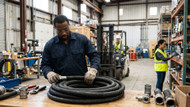
Which Chemicals Can (and Can't) Run Through an EPDM Hose?
Posted by Flex Technologies on 19th Nov 2026
When you are selecting fluid transfer components for demanding industrial or automotive environments, choosing the right elastomer makes the difference between seamless operation and costly downtime. Ethylene Propylene Diene Monomer (EPDM) is widely favored for its exceptional durability, ozone resistance, and wide temperature tolerance. However, no rubber compound is universally compatible with every fluid. Understanding the exact chemical boundaries of an EPDM hose ensures you protect your equipment, maintain workplace safety, and maximize service life. At Flex Technologies, we help engineers and facility managers navigate these material specifications every day so you can make confident decisions for your systems. Shop today.
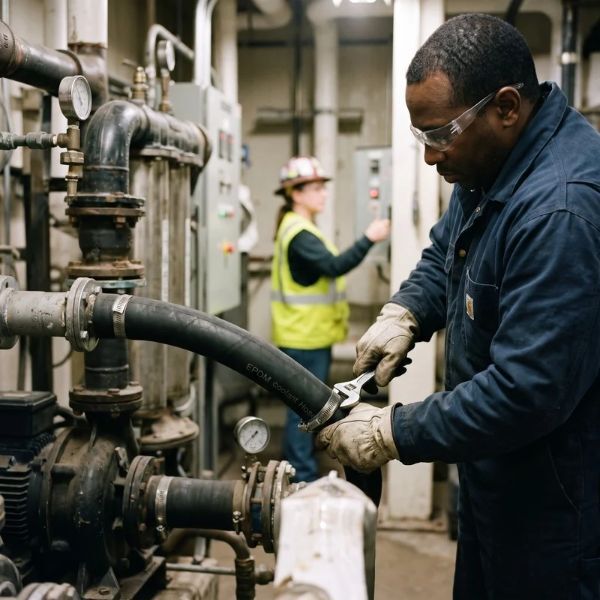
Water, Steam, and Glycol-Based Coolants (Compatible)
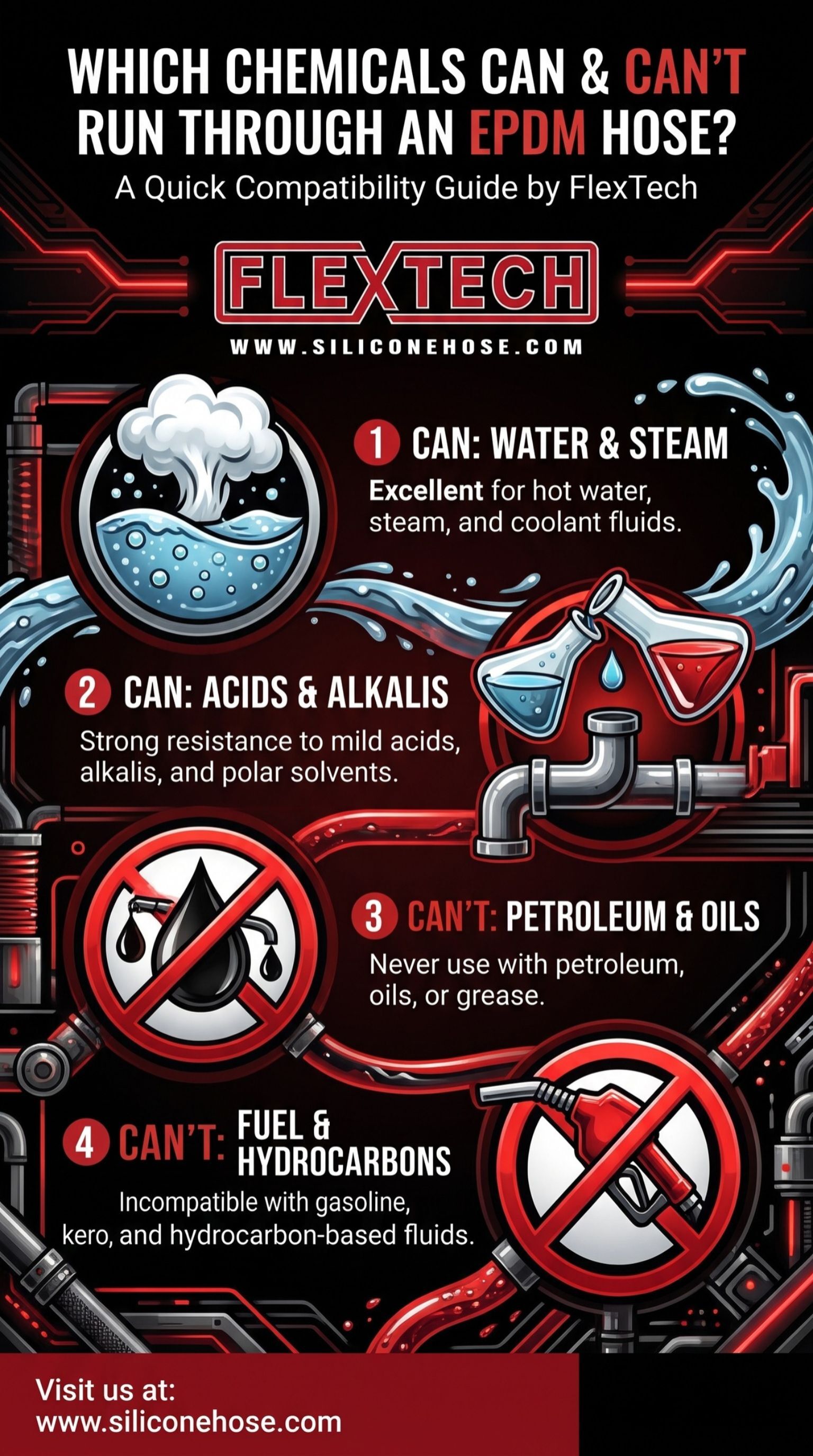
EPDM features a chemically saturated polymer backbone that gives it an exceptionally low water absorption rate. Because moisture cannot easily penetrate the material, it performs reliably when carrying hot water, saturated steam, and ethylene or propylene glycol mixtures. This makes EPDM coolant hoses the standard choice for automotive radiators, heater cores, and industrial heat-transfer loops where thermal stability and resistance to electrochemical degradation are critical.
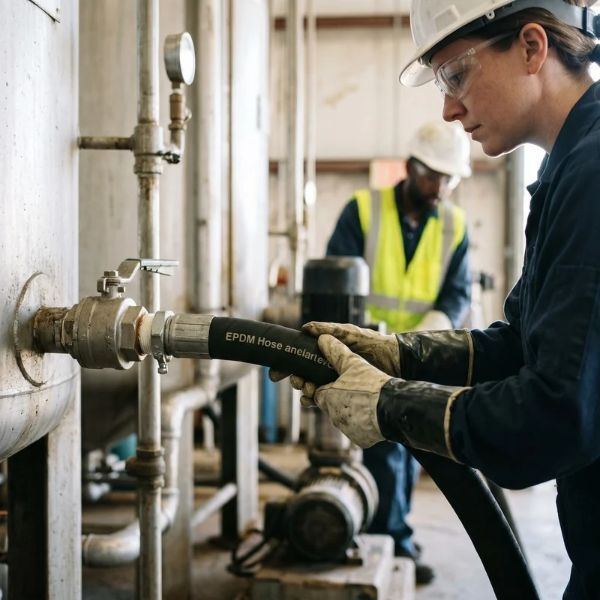
Mild Acids and Alkalis (Compatible)
Your facility can safely rely on EPDM tubing to transfer a broad range of dilute acids, alkalis, and caustic solutions. Substances such as sodium hydroxide, potassium hydroxide, dilute sulfuric acid, and boric acid have minimal effect on EPDM's structural integrity at standard operating temperatures. When specifying a high-temp EPDM hose for chemical processing or washdown stations, always verify exact concentration levels and operating temperatures, as higher heat can accelerate chemical attack even with otherwise compatible reagents.
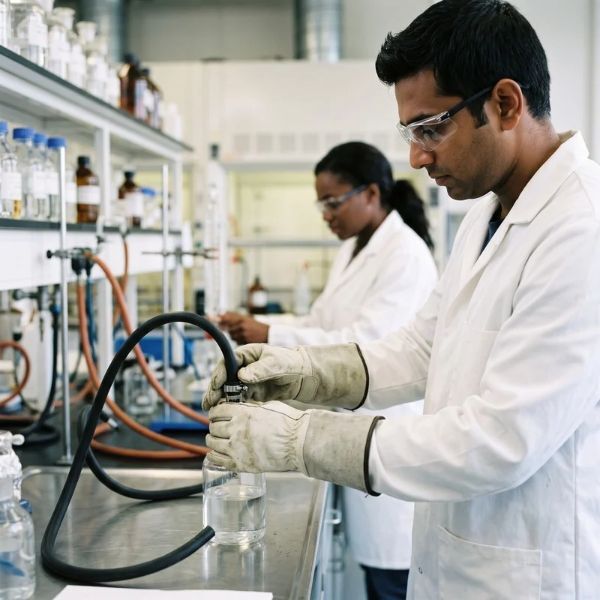
Polar Solvents, Ketones, and Alcohols (Compatible)
Unlike many general-purpose rubbers that swell or crack when exposed to oxygenated fluids, EPDM handles polar solvents remarkably well. Chemicals such as acetone, methyl ethyl ketone (MEK), alcohols, and glycol-based brake fluids pair cleanly with EPDM compounds. You can route these fluids through your lines without worrying about rapid elastomer softening or premature wall failure.
Phosphate Ester Hydraulic Fluids (Compatible)
In aerospace, power generation, and heavy manufacturing, fire-resistant phosphate ester hydraulic fluids (such as Skydrol) quickly destroy standard nitrile or neoprene lines. EPDM resists these aggressive synthetic fluids, making it a dependable elastomer for specialized hydraulic return lines, seals, and fluid transfer assemblies.
Petroleum Oils, Fuels, and Greases (Incompatible)
Every elastomer has a vulnerability, and for EPDM, it is hydrocarbons. You must never run gasoline, diesel, kerosene, crude oil, or mineral oil-based lubricants through an EPDM line. Exposure to petroleum products causes EPDM to absorb the oil, swell dramatically, lose tensile strength, and eventually rupture. If your application involves fuel delivery or petroleum lubrication, you will need a nitrile (NBR) or fluorocarbon (FKM) alternative instead.
Aromatic and Halogenated Hydrocarbons (Incompatible)
Beyond standard fuels, EPDM is completely incompatible with aromatic hydrocarbons—such as benzene, toluene, and xylene—as well as chlorinated solvents like trichloroethylene and carbon tetrachloride. These aggressive industrial solvents rapidly break down the polymer matrix. If you are planning a heavy-duty EPDM hose replacement on a multi-purpose chemical line, always audit your entire fluid list first to ensure none of these solvents are present in your wash cycles or formulations.
BROWSE ONLINE TODAY
Matching the right fluid to the right elastomer protects your people, your equipment, and your bottom line. While EPDM excels with water, steam, glycols, ketones, and mild acids, keeping it strictly away from petroleum oils and hydrocarbon solvents prevents catastrophic line failures. When you are sourcing materials from industrial EPDM hose suppliers, partnering with an experienced manufacturer ensures you get precision-engineered products tailored to your exact pressure and temperature demands. Reach out to the engineering team at Flex Technologies today to review your chemical compatibility requirements and find the ideal hose or tubing solution for your application.