
 Default Currency



Troubleshooting Common Issues with Silicone Tubing
Posted by Flex Technologies on 23rd Jan 2026
Maintaining your equipment is the key to operational efficiency, but even high-quality components like silicone tubing can face challenges if not handled correctly. Whether you are using them in a medical lab, an automotive cooling system, or a food processing plant, knowing how to identify and fix issues can save you time and money.
At Flex Technologies, we pride ourselves on providing durable solutions, but environmental factors and installation errors can still take a toll. Here is your guide to troubleshooting common issues with your specialized silicone hoses and tubing. Order today.

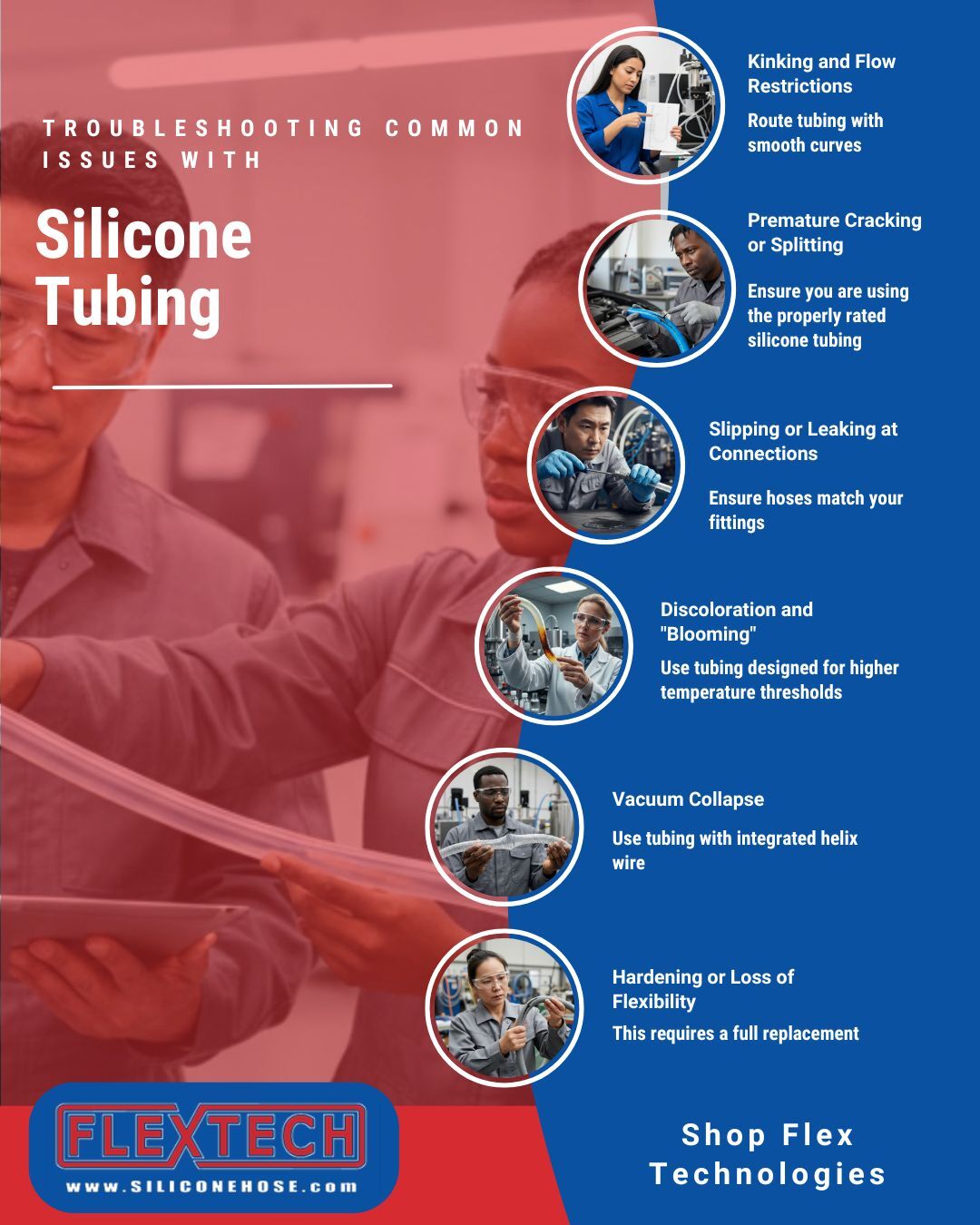
Kinking and Flow Restrictions
One of the most frequent issues you might encounter is kinking. This typically happens when the bend radius is too tight for the specific wall thickness of the tube. If you notice a sudden drop in pressure or fluid flow, check for areas where the tubing has folded over itself. To fix this, ensure your silicone tubing is routed with smooth, gradual curves. If your space is too tight for standard lines, consider upgrading to custom silicone tubing with wire reinforcement to maintain its shape under stress.
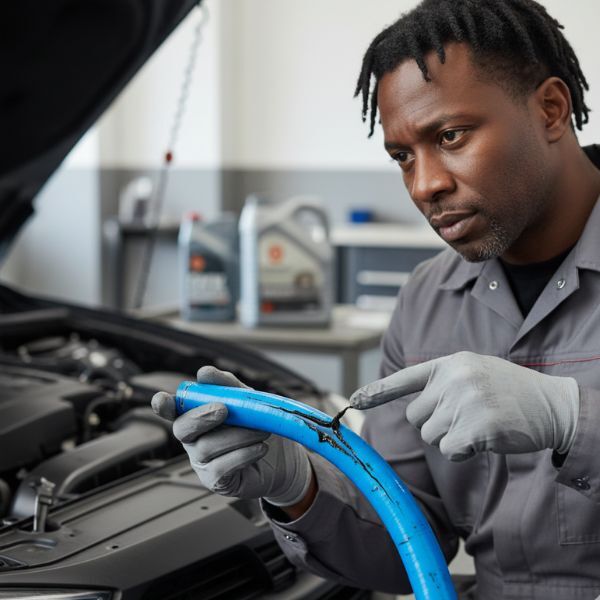
Premature Cracking or Splitting
If you see small "spider-web" cracks or deep splits, the culprit is often environmental exposure or chemical incompatibility. While silicone is incredibly resilient, prolonged exposure to high-intensity UV rays or ozone can eventually cause "ozone cracking." Additionally, using silicone hoses with incompatible fluids—like standard engine oil without a fluorosilicone liner—will cause the material to swell and eventually split. Always verify that your specialized silicone hoses and tubing are rated for the specific chemicals they will carry.
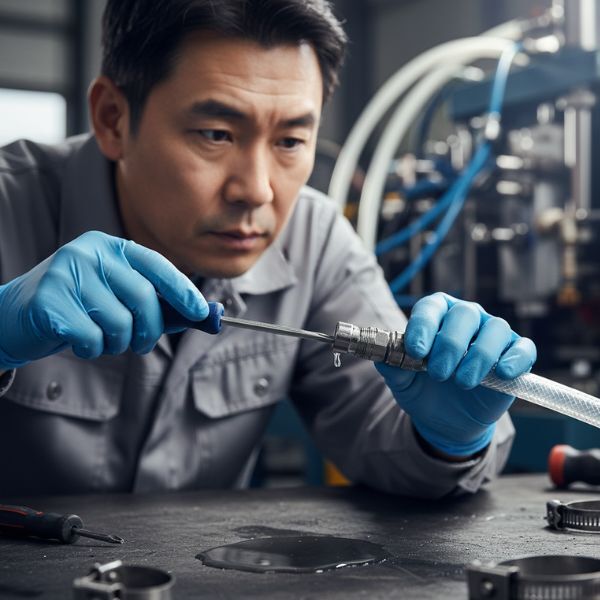
Slipping or Leaking at Connections
Are you finding wet spots or residue around your fittings? Leaks usually stem from two places: incorrect sizing or the wrong clamps. Because silicone has a lower compressibility than rubber, it requires specific "liner clamps" that won't cut into the soft material. If you are experiencing persistent leaks, ensure your custom silicone hoses match the outer diameter of your fittings perfectly. A fit that is too loose will leak, while one that is too tight can cause the hose to tear during installation.

Discoloration and "Blooming"
You might notice a white, powdery substance on the surface of your silicone hoses or general discoloration. A white powder is often just "bloom," a natural byproduct of the curing agent that is usually harmless and can be wiped away. However, dark discoloration or yellowing often indicates that the tubing has been exposed to temperatures exceeding its rated limit. If this is the case, you may need to switch to custom silicone tubing designed for higher thermal thresholds.
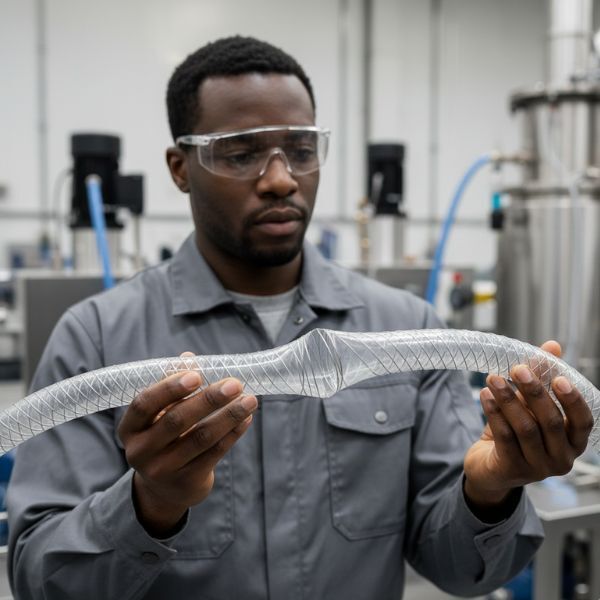
Vacuum Collapse
If you are using silicone tubing for suction applications and the walls are drawing inward, the tube is collapsing under the vacuum pressure. This is common with thin-walled variants. To resolve this, you need a higher durometer (harder) material or a reinforced hose. Utilizing custom silicone hoses with an integrated helix wire can provide the structural integrity needed to withstand high-vacuum environments without obstructing the flow.
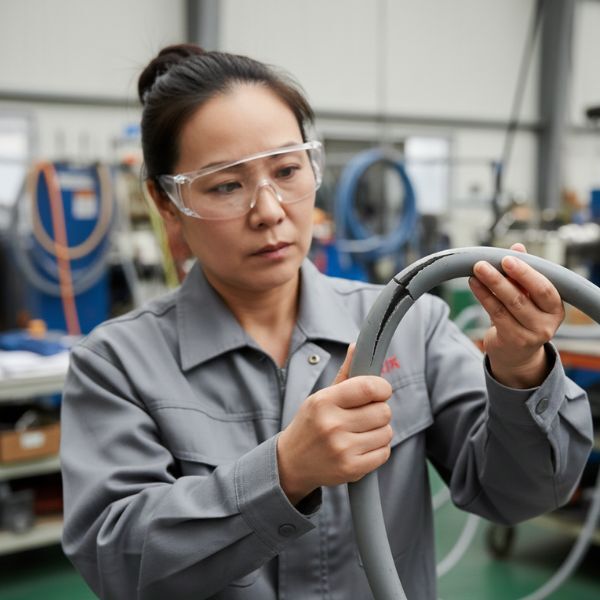
Hardening or Loss of Flexibility
Over years of service, silicone can eventually lose its characteristic "snap" and become brittle. This is usually the final stage of the material’s lifecycle, often accelerated by extreme temperature cycling. If your silicone tubing feels stiff or "crunchy" when squeezed, it is a sign that the molecular chains have broken down. At this point, the only safe solution is a full replacement to prevent a catastrophic burst.
GET STARTED TODAY
Troubleshooting your silicone hoses doesn't have to be a headache. By paying close attention to your bend radii, ensuring chemical compatibility, and using the correct hardware, you can significantly extend the life of your equipment. When standard off-the-shelf options aren't cutting it, investing in custom silicone tubing or custom silicone hoses tailored to your specific pressure and temperature needs is the best way to ensure long-term reliability. Order today.